RBL7 BioVector®人视网膜母细胞瘤细胞系 / BioVector® RBL7 Human Retinoblastoma Cell Line
- 价 格:¥99850
- 货 号:BioVector® RBL7
- 产 地:北京
- BioVector NTCC典型培养物保藏中心
- 联系人:Dr.Xu, Biovector NTCC Inc.
电话:400-800-2947 工作微信:1843439339 (QQ同号)
邮件:Biovector@163.com
手机:18901268599
地址:北京
- 已注册
BioVector® RBL7 人视网膜母细胞瘤细胞系 / BioVector® RBL7 Human Retinoblastoma Cell Line
背景与来源说明 / Context & Provenance: BioVector® RBL7 与前述的 RBL30 属于同一珍稀儿童眼科肿瘤家族,是一株专门用于研究人类视网膜母细胞瘤的发育生物学与遗传学模型。该细胞系最初由科研团队于 1980 年代从一名仅 7 个月大(7-month old)患有双侧或单侧原发性视网膜母细胞瘤(Retinoblastoma)的婴儿肿瘤组织中分离。现作为标准参考细胞株保藏于德国微生物菌种和细胞培养物保藏中心(DSMZ),官方目录编号为 ACC 944。本技术档案严格遵循 DSMZ 官方及国际癌症基因组联盟(ICGC)权威质控标准进行双语编制。
通用定义BioVector® RBL7 是一种源自人类的永生化视网膜母细胞瘤(Retinoblastoma, RB)三维球体悬浮增殖型细胞系。
在恶性眼科肿瘤学和神经外胚层发育研究中,RBL7 具有极高的分子病理学代表性。由于是在患者极年轻的婴儿期(7个月)发病并取样,该细胞系保留了早期视网膜前体细胞由于 RB1 抑癌基因纯合缺陷/失活(Biallelic Inactivation)而导致恶性转化的原始状态。基因组学筛查证实其同样存在双等位线索突变,导致内源性视网膜母细胞瘤蛋白(pRb)功能完全丧失。这使其成为国际上用于对比不同年龄段发病机制差异、解析细胞周期 E2F 信号通路过度活化、以及筛选靶向清除儿童眼部早期恶性肉瘤小分子前体药物的重要体外平台。
BioVector® RBL7 技术与细胞学特征
1. 细胞形态与空间三维生长特性
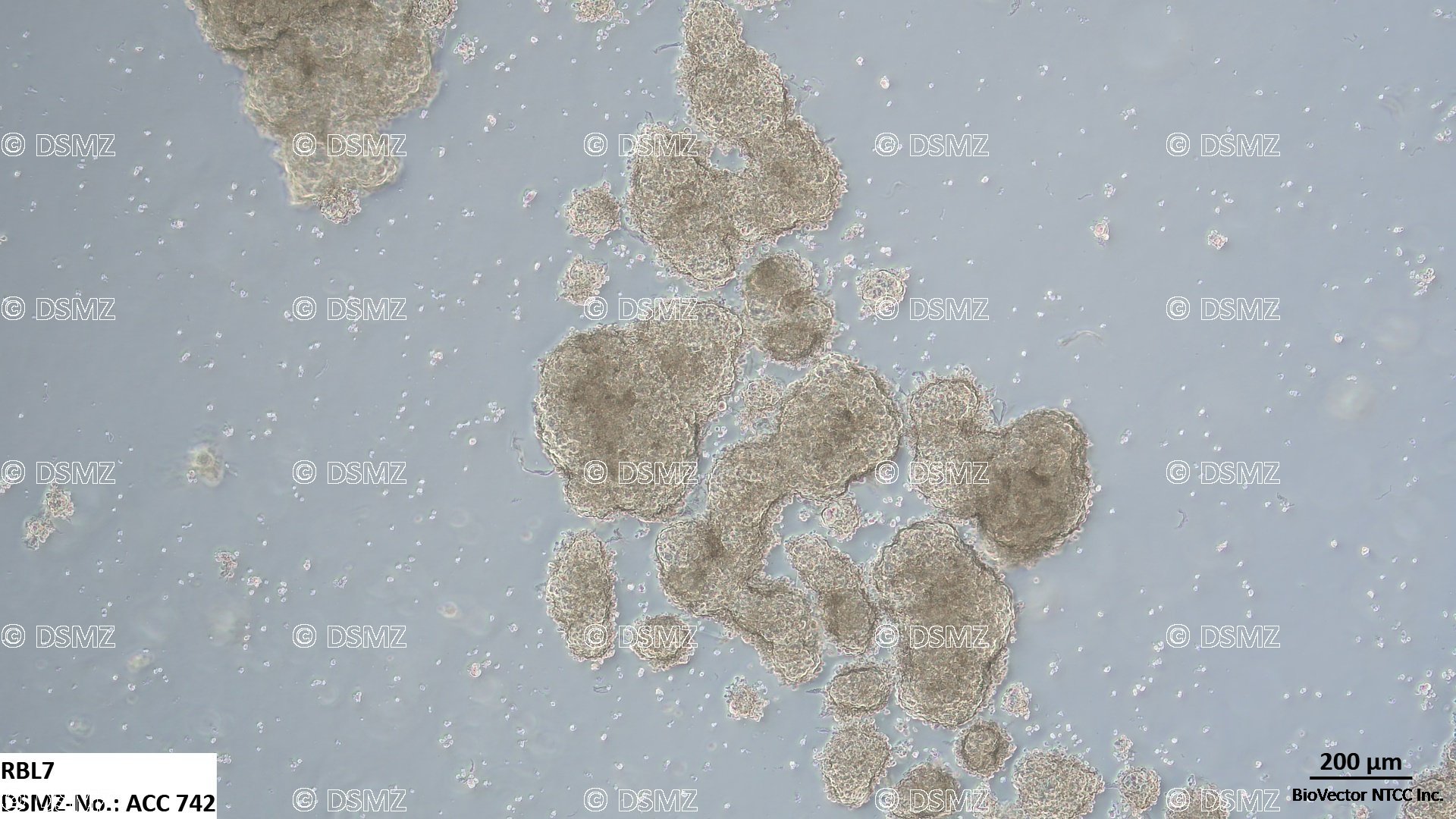
显微形态表型 与经典的 RBL30 细胞系类似,RBL7 同样表现出极其独特的悬浮聚合生长特征。镜下主要由微小的、高核质比的神经上皮样(Epithelioid-like)小圆形细胞组成。
空间聚簇表型 细胞在健康的对数生长期中不以单细胞形式分散,而是自发通过表面黏附分子紧密交联,发育成大小不一、边界清晰的三维多细胞球体颗粒或密集折光细胞团(Spheroids & Clusters)。
分化免疫标志物 保持未分化的视网膜神经外胚层表型,神经元特异性烯醇化酶(NSE)呈阳性,而经典的胶质纤维酸性蛋白(GFAP)通常呈阴性。
2. 极具针对性的复杂培养条件与操作指南
作为高度特异性的儿童实体瘤细胞,RBL7 对常规培养基极度敏感。为了防止细胞复苏失败或自发衰亡,必须严格执行以下培养规范:
推荐完全培养基配方
85 percent 优质高糖 DMEM 基础培养基(含 4.5 g/L 葡萄糖,提供高糖代谢底物)
15 percent 高比例且经过热灭活处理的 BioVector® Fetal Bovine Serum 胎牛血清
绝对必须额外添加物:10 g/mL 人胰岛素(Human Insulin)、4 mM L-谷氨酰胺,以及 1 mM 丙酮酸钠。
培养环境参数 37 摄氏度,必须搭配 10 percent 高浓度二氧化碳() 的恒温恒湿培养箱(注意:切勿使用常规的 5 percent 二氧化碳标准环境,高浓度 CO2 对维持其复杂的碳酸氢盐缓冲体系至关重要)。
倍增时间与低剪切力传代雷区 细胞生长速度平缓且偏慢,倍增时间通常在 72 到 96 小时 左右。
严禁过度机械吹打 细胞的长期存活极其依赖三维球体的局部微环境。传代时,严禁使用小口径枪头对细胞球进行强力机械重悬吹散。
常规分瓶操作 大约每 4 到 6 天,直接使用大口径移液管吸取含有细胞球的悬液,按照 1:2 的比例吸出一半转移至新瓶中,并补加等体积的新鲜完全培养基(保持 50 percent 的陈旧条件培养基,有利于细胞维持自分泌生长因子的有效浓度)。
主要科研应用
1. 基因早发型功能缺陷与靶向靶点修复
细胞周期拦截调控 BioVector® RBL7 广泛用于研究 pRb 蛋白缺失状态下,细胞如何绕过 G1/S 期限速检查点进行无限制扩增。它是测试新一代 CDK4/CDK6 抑制剂或直接靶向拦截 E2F 转录因子的小分子药物在婴儿期肿瘤中的效能的基准对照。
2. 视网膜母细胞瘤新型给药系统(如纳米载体)的 3D 渗透药效学评价
3D 球体药物递送阻障模型 鉴于其天然形成三维球体(Spheroids)的特性,科研人员常将其用于模拟眼内微实体瘤的空间屏障。用于评估化疗药物(如卡铂、长春新碱)或新型包裹纳米颗粒如何渗透并清除肿瘤核心深处的非增殖期细胞。
技术指标简表
实验操作防坑指南在操作 BioVector® RBL7 时,请务必注意培养箱的实际 CO2 浓度读数必须为 10 percent。若误将其置于常规的 5 percent CO2 培养箱中,培养基会因过度碱化在 24 小时内迅速变紫,导致娇贵的细胞球大面积解体并自发崩解。解冻复苏时,请直接将细胞接种至小体积培养表面(如 12 孔板或 6 孔板的一个孔),以维持高局部细胞浓度(推荐初始种植密度不低于 ),切勿盲目扩大种植面积。
BioVector® RBL7 Human Retinoblastoma Cell Line
General DefinitionBioVector® RBL7 belongs to the highly specialized pediatric ocular tumor lineage closely related to RBL30, serving as a premier human in vitro model to explore the developmental biology and genetics of retinoblastoma (RB). The cell line was originally established in the 1980s from the primary tumor tissue of a 7-month-old infant presenting with early-onset retinoblastoma. It is officially repository-curated by the German Collection of Microorganisms and Cell Cultures under the accession catalog number DSMZ ACC 944. This data specifications sheet is compiled utilizing authenticated genomic and cytological repository matrices.
In modern ocular oncology and neuroectodermal carcinogenesis, RBL7 possesses profound molecular pathological value. Extracted at a very early infantile stage (7 months), the cell line preserves the primitive malignant state of retinal progenitor cells driven by the homozygous biallelic inactivation of the tumor suppressor gene. Genomic sequencing confirms total functional loss of the retinoblastoma protein (pRb), resulting in constitutive hyperactivation of downstream transcriptional targets. This makes RBL7 a vital global platform to investigate age-dependent onset variances, map checkpoint overrides, and screen specialized chemotherapeutic and targeted pro-apoptotic leads.
BioVector® RBL7 Technical & Cytological Specifications
1. Morphology and Three-Dimensional Aggregate Architecture
Microscopic Appearance Characterized as a specialized sphere-forming suspension culture. Under contrast phase microscopy, it manifests as small, primitive neuroectodermal epithelioid cells exhibiting high nuclear-to-cytoplasmic ratios.
Spatial Aggregate Formations Rather than floating as independent single elements, healthy log-phase cells utilize surface adhesion profiles to spontaneously organize into dense three-dimensional multicellular spheroids or tight refractile refract clusters.
Lineage Differentiation Markers Preserves a predominantly undifferentiated neuroectodermal footprint, yielding stable positive signals for neuron-specific enolase (NSE) while registering negative for glial fibrillary acidic protein (GFAP).
2. Target Specialized Cultivation & Subculturing Protocols
As a delicate infantile solid tumor line, RBL7 remains highly sensitive to variations in its ambient microenvironment. To prevent culture failure, the following criteria must be strictly applied:
Formulated Complete Growth Medium Composition
85 percent premium high-glucose DMEM basal medium (containing 4.5 g/L glucose).
15 percent high-ratio heat-inactivated Fetal Bovine Serum (BioVector® h.i. FBS).
Mandatory Specialized Admixtures: Must be augmented with 10 g/mL human insulin, 4 mM L-Glutamine, and 1 mM Sodium Pyruvate.
Incubation Parameters 37 degrees Celsius in a humidified incubator charged with a 10 percent Carbon Dioxide () atmosphere (Note: Do not utilize the standard 5% setting; high CO2 tension is essential to maintain the specific bicarbonate buffering mechanics).
Kinetic Profiles & Low-Shear Subculturing Routines Proliferates at a moderate pace, exhibiting an average cell doubling time of 72 to 96 hours.
Avoid Excessive Trituration Proliferative success depends heavily on the local 3D multicellular cluster environment. Never subject the spheres to violent mechanical shearing or narrow-bore pipetting.
Subculturing Regimen Every 4 to 6 days, use a wide-bore pipette to gently transfer 50 percent of the sphere-containing suspension into fresh culture vessels, replenishing with an equal volume of fresh complete growth medium (maintaining 50% conditioned medium preserves vital autocrine factor levels).
Primary Research Applications
1. Infantile Inactivation Mechanics & Cell Cycle Remediation
E2F Transcriptional Checkpoint Assays BioVector® RBL7 functions as a standard reference environment to analyze how cells bypass G1/S boundary enforcement due to early-onset pRb depletion. It serves as a benchmark screen to measure the anti-proliferative efficacy of selective CDK4/CDK6 inhibitors or direct E2F small-molecule antagonists.
2. Three-Dimensional Permeation and Nanomedicine Evaluation
3D Spheroid Drug-Delivery Obstacle Modeling Due to its stable natural organization into tight multi-layered spheroids, researchers frequently employ RBL7 to model intra-tumoral spatial barriers. This setup is highly effective for evaluating how novel nanoparticle formulations or classic chemotherapeutics (e.g., carboplatin) penetrate and eliminate dormant cell niches deep inside ocular solid microtumors.
Technical Data Summary
BioVector NTCC质粒载体菌株细胞蛋白抗体基因保藏中心
电话:400-800-2947
工作QQ/微信同号:1843439339
网址http://www.biovector.net
- 公告/新闻