RBL30 BioVector® 人视网膜母细胞瘤细胞系 / BioVector® RBL30 Human Retinoblastoma Cell Line
- 价 格:¥99860
- 货 号:BioVector® RBL30 cell
- 产 地:北京
- BioVector NTCC典型培养物保藏中心
- 联系人:Dr.Xu, Biovector NTCC Inc.
电话:400-800-2947 工作微信:1843439339 (QQ同号)
邮件:Biovector@163.com
手机:18901268599
地址:北京
- 已注册
BioVector® RBL30 人视网膜母细胞瘤细胞系 / BioVector® RBL30 Human Retinoblastoma Cell Line
背景与来源说明 / Context & Provenance: BioVector® RBL30 是一种高度特异性的人类神经外胚层恶性肿瘤体外研究模型。该细胞系于 1988 年由科研团队从一名 30 个月大(30-month old)患有单侧视网膜母细胞瘤(Unilateral Retinoblastoma)且接受过前期治疗的男童肿瘤组织中分离并成功建立。目前作为经典标准品保藏于德国微生物菌种和细胞培养物保藏中心(DSMZ),官方目录编号为 ACC 945。本技术档案严格基于 DSMZ 及相关国际前沿肿瘤基因组学鉴定参数进行双语编制。
通用定义
BioVector® RBL30 是一种源自人类的永生化视网膜母细胞瘤(Retinoblastoma, RB)三维球体悬浮生长型细胞系。视网膜母细胞瘤是婴幼儿最常见的眼内恶性实体肿瘤,主要由视网膜前体细胞在发育过程中发生基因突变失活所致。
在现代眼科肿瘤学、发育神经生物学以及抑癌基因阻断机制研究中,BioVector® RBL30 是一株极具代表性的功能缺失型突变模型。该细胞系在分子遗传学上的核心价值在于其明确的 $RB1$ 抑癌基因双等位线索失活(Biallelic Inactivation) 背景:其一侧等位基因携带有明确的无义突变 (exon 8 R251, chr 13:48362847C>T),而另一侧等位基因则伴随严重的*杂合性丢失(Loss of Heterozygosity, LOH)事件。这使其成为国际上用于攻克儿童眼部恶性肿瘤、重塑 $RB1$ 信号通路、筛选新型靶向促凋亡小分子以及开发视网膜母细胞瘤新型化疗敏感性联合疗法的核心体外沙盘。
BioVector® RBL30 技术与细胞学特征
1. 细胞形态与独特的空间三维生长特性
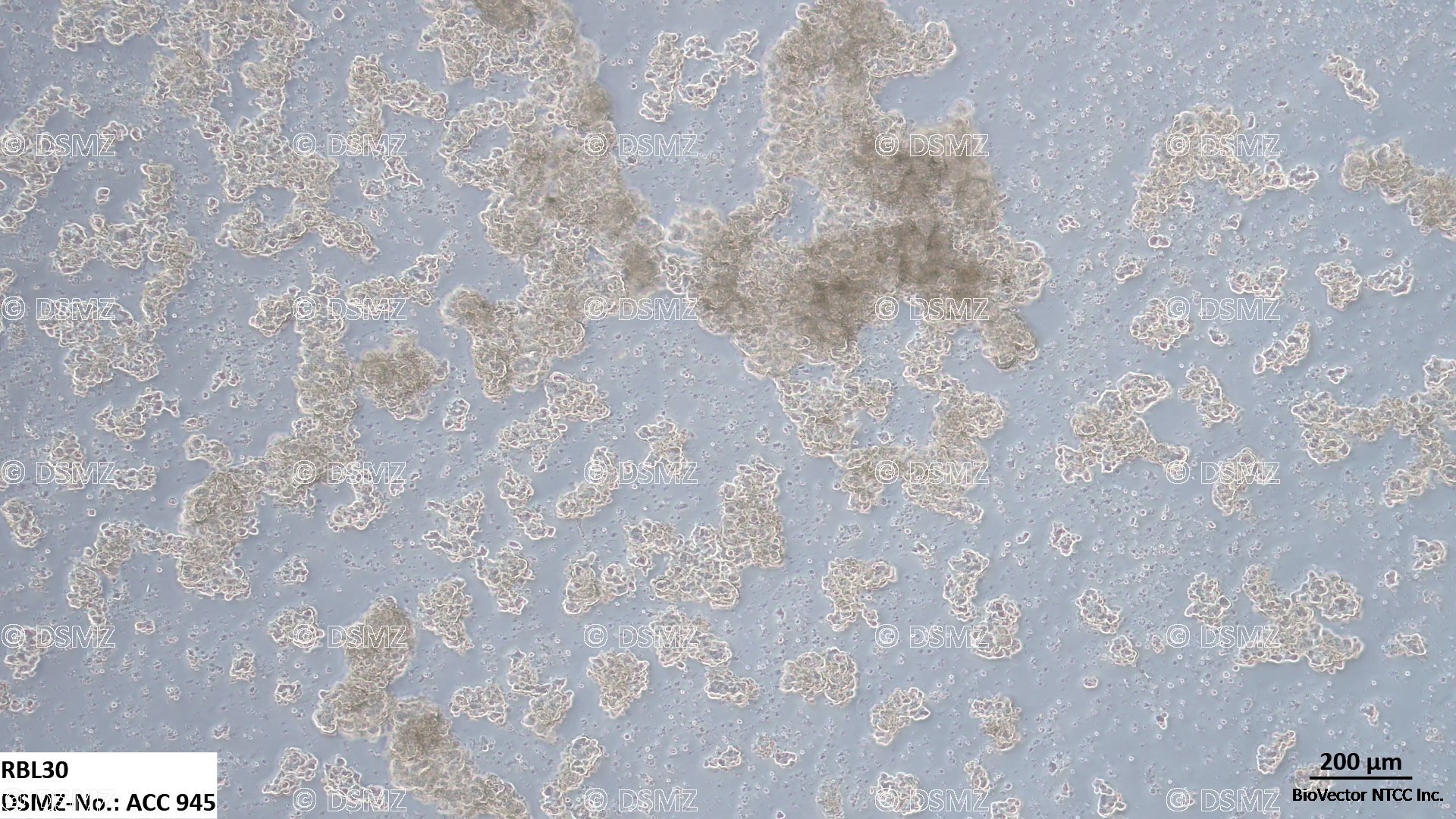
显微形态表型 属于非常独特的悬浮聚合生长细胞。在复苏或传代早期,细胞主要表现为细小的单细胞以及散在的小细胞丛。随着培养周期的延长,细胞具有极强的空间自发聚集倾向,会逐渐发育成外观清晰、结构致密的三维多细胞球体复合物(Spheroids/3D Aggregates),成熟的细胞球体直径可增长至 5 mm 左右。
细胞超微特征 保持了经典视网膜母细胞瘤的典型神经上皮样(Epithelioid-like)小细胞结构,细胞核体积巨大且质比极高,胞质稀少,球体内部细胞紧密交联。
$RB1$ 位点甲基化与突变图谱(核心学术亮点)
启动子区域(CpG106)表现为 0% 的低甲基化状态,而内含子 2 的印记控制区(CpG85)表现为 100% 的完全甲基化。
基因组 Sanger 测序证实其存在明确的 $RB1$ 外显子 8 终止子前移无义突变(R251*),且完全丢失了另一侧正常的野生型等位基因(LOH 状态)。
2. 极具针对性的复杂培养条件与操作指南
由于 RBL30 细胞属于生长速度极其缓慢且对微环境成分高度依赖的“娇贵”细胞,日常养护必须严格遵循以下专属配方:
推荐完全培养基配方
85 percent 高糖 DMEM 基础培养基(含 4.5 g/L 葡萄糖)
15 percent 高比例热灭活胎牛血清(BioVector® h.i. FBS)
额外必须添加物:10 $\mu$g/mL 人胰岛素(Human Insulin)、4 mM L-谷氨酰胺、1 mM 丙酮酸钠以及 50 $\mu$M $\beta$-内酰胺类还原剂($\beta$-巯基乙醇, Mercaptoethanol)。
培养环境参数 37 摄氏度,必须搭配 10 percent 高浓度二氧化碳(
$CO_2$) 的恒温恒湿培养箱(注意:并非常规的 5 percent 二氧化碳)。 倍增时间与特异传代雷区 细胞生长极慢,其细胞倍增时间通常长达 5 天(约 120 小时) 左右。
低损耗传代法 传代时切勿进行剧烈的机械吹打以破坏其健康球体结构。建议大约每 5 到 6 天进行一次常规分瓶,直接使用大口径移液管(如大肚吸管或剪粗尖的枪头)吸取含有细胞球的悬液,按照 1:2 的体积比例紧密分转至新孔/新瓶中(保留原有 50 percent 的陈旧培养基以维持自分泌生长因子浓度)。
细胞计数前处理 若因实验需要必须测定绝对细胞数量,需单独吸取部分球体,加入 Accutase(广谱细胞酶切消化液)浸润消化 5 到 10 分钟,再轻柔吹打 2 次将其分散为单细胞后方可计数。
主要科研应用
1. 视网膜母细胞瘤发病机制与双等位缺陷矫正研究
RB1 修复与细胞周期阻滞 BioVector® RBL30 是研究 $RB1$ 肿瘤抑制缺陷的绝佳阴性对照背景。科研人员常通过慢病毒载体将野生型 $RB1$ 基因重新转入细胞内,以观察其如何阻断下游弹性转录因子 E2F 的活性,从而诱导视网膜母细胞瘤细胞发生 $G_1$ 期阻滞或分化逆转。
2. 联合类 retinoid 与 BMP-4 诱导凋亡药物筛选
靶向分化治疗方案评估 该细胞系被广泛用于评估合成视黄醇类衍生物(RA)联合骨形态发生蛋白-4(BMP-4)的促凋亡叠加效应。用于阐明药物如何通过上调 Apaf-1 转录水平并级联激活 Caspase-9 和 Caspase-3,从而绕过 $RB1$ 缺陷直接清除眼部恶性肿瘤细胞。
技术指标简表
| 参数 | 描述 |
| 疾病分类 | 眼科神经外胚层恶性肿瘤 / 单侧视网膜母细胞瘤 (RB) |
| 生长特性 | 独特的单细胞悬浮演变为三维多细胞球体颗粒 (Spheroids) |
| 核心分子特征 | 携带双等位 RB1 基因功能丧失 (R251* 无义突变伴随 LOH) |
| 生物安全等级 | BSL 1 级标准(低生物学风险工业/科研级细胞株) |
| 质量控制认证 | 经标准 STR 分型完整认证,PCR 筛查确证无支原体及各类人类急慢性病毒隐患 |
实验操作防坑指南
日常维护 BioVector® RBL30 细胞时,最大的忌讳是“频繁过度消化”和“使用普通小口径移液枪头猛烈吹打”。该细胞的增殖极度依赖其自发形成的三维球体微环境,如果反复将其吹散成彻底的单细胞状态,细胞会因为失去胞间黏附信号而进入长期的停滞期甚至自发走向凋亡。此外,复苏初期必须将整管冻存细胞(约 $6 \times 10^6$ 个细胞)一步接种至 6 孔板的单个孔中以保持极高的初始局部密度,切勿直接分散种植于大培养瓶内。
BioVector® RBL30 Human Retinoblastoma Cell Line
General Definition
BioVector® RBL30 is an immortalized human suspension cell line established from a malignant neuroectodermal eye tumor known as retinoblastoma (RB).
In clinical ocular oncology, developmental neurobiology, and tumor suppressor gene mechanics, BioVector® RBL30 represents a highly strategic functional-loss framework model. The primary academic value of this cell line resides in its well-defined biallelic inactivation profile of the
BioVector® RBL30 Technical & Cytological Specifications
1. Morphology and Three-Dimensional Aggregate Proliferation
Microscopic Appearance Characterized as a highly specialized sphere-forming suspension culture.
Immediately following post-thaw recovery or subculturing, it presents as tiny single cells and minor loose clusters. As the incubation cycle progresses, the cells exhibit a strong natural compulsion to assemble into dense, tightly cross-linked three-dimensional multicellular spheroids (3D Aggregates), which can eventually reach diameters of up to 5 mm. Ultrastructural Features Preserves classic retinoblastoma small epithelioid cytological parameters, characterized by large pleomorphic nuclei, extremely high nuclear-to-cytoplasmic ratios, and sparse cytoplasm clustered tightly within the core of the spheroids.
$RB1$ Epigenetic and Mutation Signature (Core Asset)
The core promoter region (CpG106) demonstrates a 0 percent hypomethylated state, whereas the internal intron 2 imprint control domain (CpG85) exhibits a 100 percent fully methylated matrix.
Sanger sequencing confirms a direct nonsense stop codon mutation within exon 8 ($R251^{*}$) of the $RB1$ gene, coupled with total loss of the alternative wild-type allele via an LOH event.
2. Tailored Specialized Cultivation & Subculturing Protocols
Because RBL30 cells proliferate exceptionally slowly and maintain strict reliance on specialized microenvironment variables, the following culture matrix must be applied:
Formulated Complete Growth Medium Composition
85 percent high-glucose DMEM basal medium (containing 4.5 g/L glucose).
15 percent high-ratio heat-inactivated Fetal Bovine Serum (BioVector® h.i. FBS).
Mandatory Specialized Admixtures: Augmented with 10 $\mu$g/mL human insulin, 4 mM L-Glutamine, 1 mM Sodium Pyruvate, and 50 $\mu$M $\beta$-Mercaptoethanol.
Incubation Parameters 37 degrees Celsius in a humidified environment charged with 10 percent Carbon Dioxide (
$CO_2$) (Note: Requires a higher $CO_2$ tension than standard 5% setups). Kinetic Profiles & Maintenance Traps Proliferates at an unusually prolonged pace, demonstrating an average doubling time of approximately 5 days (120 hours).
Low-Shear Subculturing Routine Do not perform harsh mechanical agitation or forceful pipetting on healthy clusters. Subculture every 5 to 6 days at a strict 1:2 volume ratio by gently transferring 50 percent of the sphere-containing suspension into fresh wells using wide-bore or wide-opening serological pipettes, leaving the remaining aggregates undisturbed in their conditioned media.
Pre-Counting Dissociation Protocol If an absolute viable cell count is required for downstream assays, aliquot a sample of the spheroids, incubate with Accutase for 5 to 10 minutes, and triturate gently twice to achieve a single-cell suspension prior to counting.
Primary Research Applications
1. Retinoblastoma Oncogenesis & Biallelic Remediation Modeling
RB1 Restoration Arrays BioVector® RBL30 functions as an excellent endogenous $RB1$-null target environment. Ectopic restoration of wild-type $RB1$ via lentiviral systems enables investigators to track how the re-established retinoblastoma protein complex intercepts E2F transcription factors to trigger cell cycle arrest or reverse the undifferentiated blast status.
2. Retinoid and BMP-4 Synergistic Apoptosis Screening
Targeted Differentiation Drug Assays The cell line is widely exploited to map the additive pro-apoptotic index of synthetic retinoic acid (RA) combined with bone morphogenetic protein 4 (BMP-4), demonstrating how signaling cascades trigger Apaf-1 expression and activate Caspase-9/Caspase-3 independent of functional baseline pRb pathways.
Technical Data Summary
| Parameter | Description |
| Oncology Context | Ocular Neuroectodermal Malignancy / Unilateral Retinoblastoma (RB) |
| Growth Properties | Specialized single-cell suspension organizing into distinct 3D spheroids |
| Molecular Profiling | Biallelic functional loss of RB1 (R251* nonsense mutation combined with LOH) |
| Biosafety Classification | BSL 1 standard low-risk human cancer cell line containment guidelines apply |
| Quality Control Status | STR verified for definitive lineage authentication; certified negative for mycoplasma and viral pathogens |
BioVector NTCC质粒载体菌株细胞蛋白抗体基因保藏中心
电话:400-800-2947
工作QQ/微信同号:1843439339
网址http://www.biovector.net
- 公告/新闻