ZYCY10P3S2T E.coli Minicircle Production Strain NTCC®大肠杆菌微环DNA载体产生菌株 BioVector NTCC质粒载体菌种细胞基因保藏中心
- 价 格:¥98965
- 货 号:Biovector691470
- 产 地:北京
- BioVector NTCC典型培养物保藏中心
- 联系人:Dr.Xu, Biovector NTCC Inc.
电话:400-800-2947 工作微信:1843439339 (QQ同号)
邮件:Biovector@163.com
手机:18901268599
地址:北京
- 已注册
ZYCY10P3S2T E.coli Minicircle Production Strain NTCC®大肠杆菌微环DNA载体产生菌株/感受态细胞- BioVector NTCC质粒载体菌种细胞基因保藏中心
Cat# Biovector691470
BioVector's ZYCY10P3S2T Minicircle Production Strain, Simplifying minicircle production
Optimized for minicircle production, the BioVector's ZYCY10P3S2T Minicircle Production Strain comes as
competent cells, so you can directly transform ligation reactions or plasmids. The competent cells are
prepared and tested using a modification of the procedure developed by Kay, et al., and are suitable
for cloning and production of minicircle-based plasmids.
The BioVector's ZYCY10P3S2T E.coli Minicircle Production Strain is derived from the BioVector's BW27783 E. coli strain
that stably expresses a set of inducible minicircle-assembly enzymes, PhiC31 integrase, and I-SceI
homing endonuclease. This bacterial strain enables production and purification of minicircles in a
time frame and quantity similar to that of routine plasmid DNA preparation.
Please note that other competent E. coli strains cannot be substituted for minicircle production as
they do not have the appropriate genomic modifications to produce minicircles.
About Minicircle Technology
Episomal expression sustained over weeks
Foreign DNA-free
More efficient transfections from small plasmid size
Unlimited insert size
Optimized coli minicircle production strain
Works in vitro and in vivo
When you want sustained transgene expression without introducing any foreign DNA—such as for
model animal and gene therapy development—Minicircle Technology is a great gene expression
option. Produced as small excised, circular DNA fragments from a parental plasmid, the non-viral,
episomal Minicircle expression cassette is free of any bacterial plasmid DNA sequences, and comes
with a variety of promoter and reporter combinations. Their small size facilitates more efficient
transfection than what’s possible with standard-sized plasmids, and, while Minicircles do not
replicate with the host cell, expression lasts for 14 days or longer in dividing cells, and can continue
for months in non-dividing cells.
How It Works
Generating minicircles from the parental cloning vector
To generate minicircles that are ready for transfection, you need your Minicircle Cloning Vector with
your insert (gene, promoter-gene cassette, small RNA, etc.), BioVector's optimized, ready-to-transform
ZYCY10P3S2T E. coli Minicircle Producer Strain, and arabinose.
Minicircles are produced from the full-sized Parental Minicircle using PhiC31 Integrase, which
mediates a recombination event between the PhiC321 attB and attP sites on the parental plasmid
(Figure 1). This reaction results in two products—the minicircle, which is now free from any bacterial
DNA sequences—and the parental plasmid. To get rid of the parental plasmid, the I-SceI
endonuclease recognizes and acts on the I-SceI sites on the parental plasmid, resulting in
degradation of the parental plasmid.
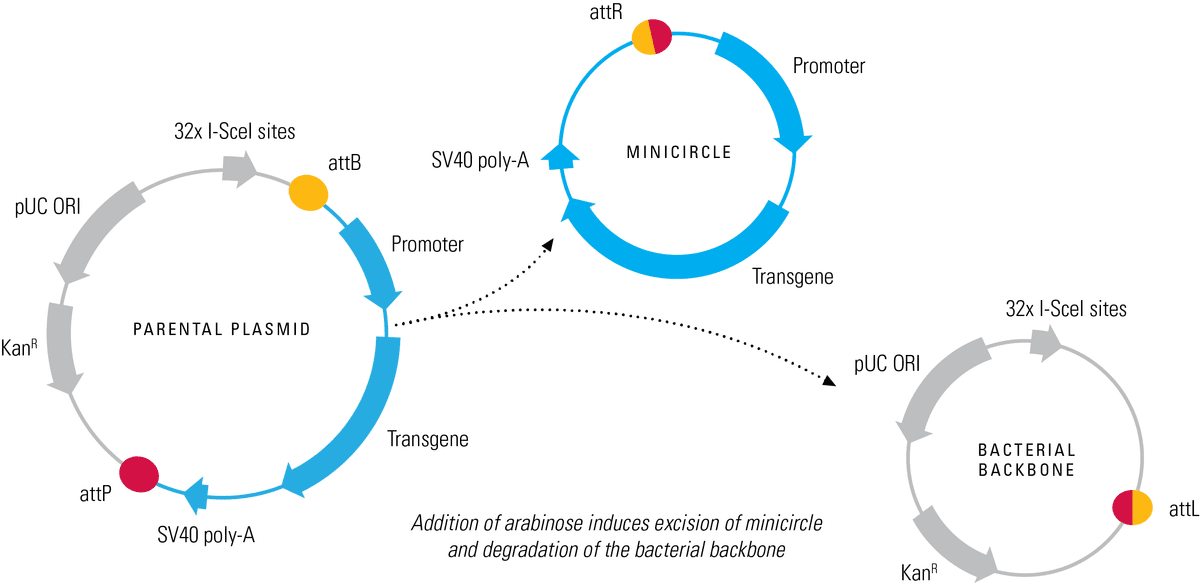
Figure 1. Generating minicircle DNA from the Parental Minicircle Plasmid.
More about the BioVector's ZYCY10P3S2T E. coli Minicircle Producer Strain
The Minicircle Producer Strain harbors an arabinose-inducible system to express the PhiC31
integrase and the I-SceI endonuclease simultaneously. The BioVector's ZYCY10P3S2T strain also contains a
robust arabinose transporter LacY A177C gene. Adding arabinose to the media turns on expression
of the PhiC31 integrase and endonuclease genes, resulting in separation of the Parental Minicircle
Plasmid into the individual minicircle and parental plasmids (from the PhiC31 Integrase activity), and
the degradation of the parental plasmid (from I-SceI endonuclease activity).
Supporting Data
Achieve sustained expression from minicircles after transfection in vitro and in vivo
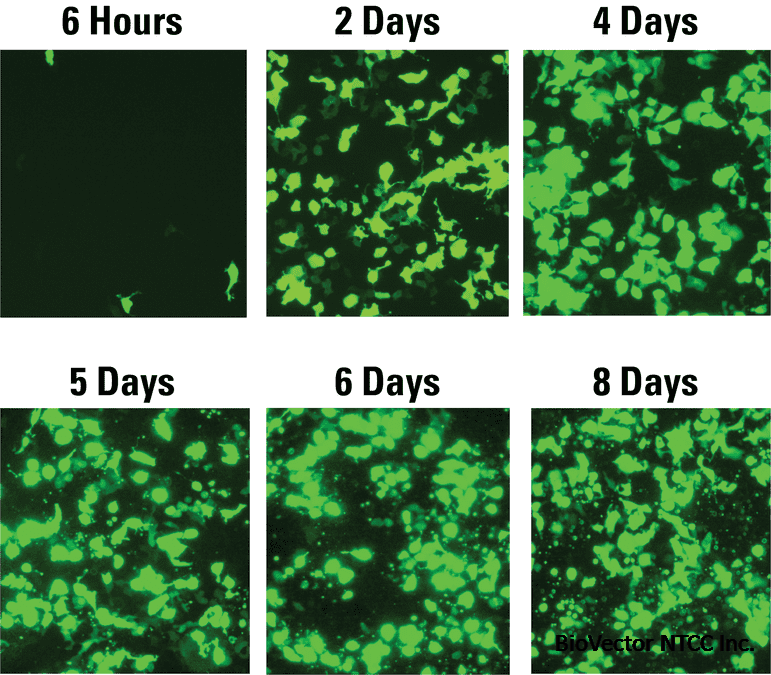
Figure 1. Easy, sustained transfection in most cell types. Transfection of 1 μg of minicircle DNA
(pMC.CMV-MCS-EF1-GFPSV40PolyA, Cat.# BioVector-MN511A-1) into HEK293 cells delivers over one week
of robust gene expression.
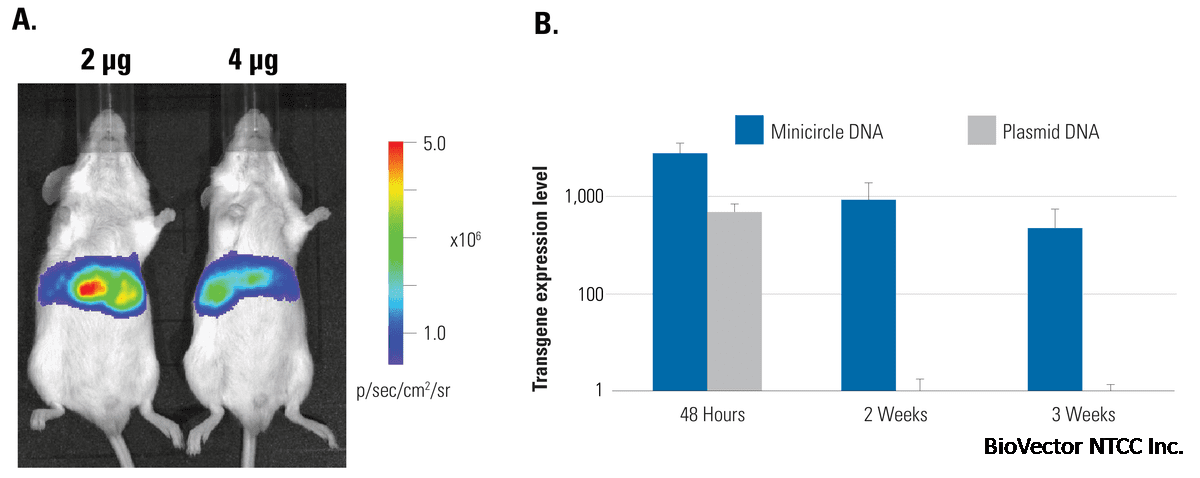
Figure 2. Express transgenes for weeks in animal models. (A) Hydrodynamic tail vein injection of 2
µg and 4 µg of minicircle DNA (CMV-GFP-Luc) into mice shows excellent expression after 48
hours. (B) Minicircle-delivered transgenes retain robust expression that can last for weeks compared
to transgenes that are delivered using plasmid DNA, where expression is rapidly lost. In this study,
40 µg of minicircle DNA was introduced into mice via hydrodynamic tail vein injection.
【Supplier来源】BioVector NTCC Inc.
【Website网址】 http://www.biovector.net
- 公告/新闻